
How to Study on Your Commute Without Getting Carsick or Losing the Thread
Use your commute for review, not new material: flashcards when seated, audio when walking or standing, light listening only if you drive. A simple plan.
· 6 min →
Dual Coding: Why Pairing Words With Pictures Helps You Remember
Dual coding means learning an idea as words and as a simple picture, then linking the two. Why it works, how to do it, and why it isn't about learning styles.
· 6 min →
The Blurting Method: The Fastest Way to Find What You Don't Know
Blurting means writing everything you remember on a blank page, then checking it against your notes. How to do it properly, and the mistakes that waste it.
· 6 min →
How to Make Good Flashcards: The Rules That Make Them Stick
One idea per card, a real question on the front, no lists, your own words. The rules for flashcards that stick, with nursing and psych examples.
· 6 min →
How to Stop Procrastinating on Study (Without Relying on Willpower)
Procrastination is mostly about dodging a bad feeling, not laziness. Make the first step clear, make escaping harder, and forgive yourself to break the loop.
· 6 min →
How to Study When You Have Zero Motivation (Start Before You Feel Like It)
No motivation to study? Don't wait for it. Shrink the task until it's too small to refuse, start with questions, and let the feeling catch up with you.
· 6 min →
How to Catch Up on Weeks of Missed Lectures (Without Rewatching Them All)
Behind by weeks of lectures? Sort them by what's due, quiz yourself before you rewatch, and use 1.5x to 2x speed. A plan that fits around the current week.
· 6 min →
How to Revise from Lecture Slides (the Slides Are Not the Notes)
Scrolling through lecture slides feels like revision but mostly isn't. How to turn each slide into questions, fill in what was said out loud, and remember it.
· 6 min →
How to Study for Short Answer Exams: What Markers Are Looking For
Short answer exams reward points, not paragraphs. How to read the marks, write answers markers can tick, and practise by writing from memory.
· 6 min →
How to Write Exam Essays Under Time Pressure (Without Running Out of Clock)
How to write exam essays under time pressure: budget minutes by marks, plan for five to eight minutes, put your answer in the first line, and practise timed.
· 6 min →
How to Study Calculus at Uni When the Lectures Move Too Fast
Calculus lectures move fast and every week builds on the last. Fix your algebra, learn what a derivative means, then do problems daily from a blank page.
· 7 min →
How to Study Economics: Master the Diagrams and the Rest Follows
Economics exams are mostly diagrams in disguise. Learn to draw supply and demand from memory, tell a shift from a movement, and explain each step in words.
· 7 min →
How to Study for Accounting Exams: Practise the Questions, Not the Textbook
Accounting exams reward doing, not reading. Learn the accounting equation cold, practise problems from a blank page, show workings and keep an error log.
· 7 min →
Statistics for Psychology Students: What to Understand Before the Exam
The psychology statistics ideas exams test most: what a p-value means, effect size, Type I and II errors, and how to pick the right test from a scenario.
· 7 min →
How to Study Organic Chemistry: Mechanisms Over Memorising
Organic chemistry gets easier when you learn to read curly arrows, spot nucleophiles and electrophiles, and practise mechanisms from a blank page.
· 6 min →
How to Study Biochemistry Pathways Without Memorising Every Enzyme
Biochemistry pathways get easier when you learn the job, the control points and the fed or fasting switch first. Most enzymes can wait.
· 6 min →
How to Study Microbiology: Bugs, Drugs and the Patterns Exams Love
Sort organisms by Gram stain and shape, learn each bug as one profile, pair it with its drugs and test yourself from the patient backwards.
· 6 min →
How to Study Physiology So It Actually Makes Sense
Physiology runs on a few big ideas that repeat in every system. Learn the feedback loop, the gradients and the graphs, then predict what happens next.
· 6 min →
How to Study Pathophysiology: Learn the Mechanism, Not the List
Stop memorising symptom lists. Learn each disease as a chain from normal physiology to mechanism to signs, then test yourself on the links.
· 6 min →
Drug Calculations for Nursing Students: Four Formulas and the Mistakes That Cost Marks
The four drug calculation formulas nursing students need, worked examples, and the unit and decimal mistakes that fail medication maths tests.
· 7 min →
How to Prepare for an OSCE Without Freezing When the Bell Goes
An OSCE tests what you do and say in front of an examiner. How to practise stations out loud, use the marking criteria, and stay steady on the day.
· 7 min →
How to Answer NCLEX-Style Questions When Every Option Looks Right
NCLEX-style questions ask who comes first, what you can delegate and what keeps the patient safe. A step-by-step method for each, with worked examples.
· 7 min →
How to Stay on Top of a Semester When You Work Part-Time
Working shifts and studying? Review each lecture within a day, use short blocks around shifts, keep free days for hard topics, and do a Sunday catch-up.
· 6 min →
The Pomodoro Technique for Students: When It Helps and When It Gets in the Way
The Pomodoro technique is great for starting and for flashcards, and can break your focus on hard problems. When to use 25 and 5, and when to change it.
· 6 min →
Open-Book Exams: Why Bringing Your Notes Makes Them Harder
Open-book exams punish students who plan to look things up. How to prepare: learn the core cold, build a slim tabbed index, and practise against the clock.
· 6 min →
How to Study Medical Terminology Fast: Learn 200 Parts, Not 2,000 Words
Learn word parts instead of whole words, read every term from the suffix back, and test yourself both ways. A fast medical terminology method for students.
· 6 min →
How Long Should You Study For? The Answer Isn't the Number of Hours
How long should a study session be? Research says 30 to 60 focused minutes with short breaks, spread over days, beats one long marathon. How to plan yours.
· 6 min →
Brainscape vs Anki: One Asks How Confident You Are, the Other Asks How Hard It Was
Brainscape vs Anki compared: price, scheduling, ease of use and ready-made decks. Which spaced repetition app suits your course, and where each one falls short.
· 6 min →
Psychology Research Methods: The Concepts Exams Test Most
The research methods concepts psychology exams test most: variables, confounds, validity vs reliability, sampling, and correlation vs causation.
· 7 min →
The Best AI Tutors for Uni Students, Compared Honestly
ChatGPT, Claude, Gemini, Khanmigo and The Study Mill compared as AI tutors for uni: which explains best, which sticks to your course, which tests you.
· 7 min →
How to Answer Law Problem Questions with IRAC (and Why Most Answers Lose Marks)
IRAC for law problem questions: one IRAC per issue, rules stated briefly, and most of your words on applying the law to the facts. Mistakes that cost marks.
· 7 min →
RemNote Alternatives for Students Who Don't Want to Build a Second Brain
RemNote is powerful if you love building a knowledge base. These RemNote alternatives are for students who just want to learn this week's lecture.
· 6 min →
Practice Questions vs Past Papers: When to Use Which
Practice questions build what you know, topic by topic. Past papers show whether it holds up under exam conditions. When to use each, and how not to waste them.
· 6 min →
The Best AI Note Takers for Uni Lectures, Compared Honestly
Otter, Genio, Microsoft Transcribe, Notion and more for uni lectures. What each AI note taker does well, where free plans stop, and what to do after.
· 7 min →
How to Study Anatomy Without Drowning in Names
Decode the Latin, learn structure with function, draw from memory and test yourself on blank diagrams. A practical anatomy method for uni students.
· 6 min →
Is Knowt Free? What You Get Without Paying (and Where the Limits Are)
Yes, Knowt is free for flashcards and its study modes. The limits sit on the AI features. What the free plan covers, what Ultra adds, and when to pay.
· 6 min →
How to Take Lecture Notes You'll Actually Use Later
Most lecture notes get written once and never opened again. How to take notes that turn into revision: fewer words, questions in the margin, a review within a day.
· 6 min →
NotebookLM vs ChatGPT for Studying: One Reads Your Course, One Knows the World
NotebookLM sticks to your uploaded readings. ChatGPT knows everything else. Which one to use for which study job, and where both fall short.
· 7 min →
Interleaving: Why Mixing Topics Feels Worse and Works Better
Interleaving means mixing topics in one study session instead of doing them in blocks. It feels slower, and it works better. What it is and how to use it.
· 6 min →
The Best AI Quiz Generators That Use Your Own Notes, Compared
Most AI quiz generators can read your notes. Fewer write questions you can't beat by guessing. The tools compared, plus a two-minute test for any quiz.
· 7 min →
How to Memorise Drug Names Without Learning 300 Separate Facts
Learn drug names by their endings, one prototype per class and spaced review. A practical pharmacology method for nursing and medicine students.
· 6 min →
Knowt vs StudyFetch: Which Free Plan Actually Gets You Through a Unit?
Knowt's free plan lasts a whole unit if you study with flashcards. StudyFetch's free plan is closer to a trial. What each one gives you, and when to pay.
· 6 min →
A Two-Week Exam Study Plan That Leaves Room for Life
Fourteen days until the exam? A day-by-day plan with two practice papers, weak topics brought back after a gap, and two full rest days you don't have to earn.
· 6 min →
The Best Free Quizlet Alternatives for Nursing Students (Pharm, A&P and NCLEX-Style Questions)
Nursing needs three kinds of study: pharm recall, A&P understanding and exam-style questions. The free Quizlet alternatives that fit each one.
· 6 min →
Gizmo Alternatives: AI Flashcards Without the Lives and Timers
Gizmo's free plan runs on lives, so wrong answers can lock you out. These Gizmo alternatives make AI flashcards from your notes without stopping you mid-review.
· 6 min →
How to Stay Calm in an Exam When Your Mind Goes Blank
Your mind goes blank mid-exam. What to do in the next 60 seconds, why it happens, and how to study so stress has less to knock loose on the day.
· 6 min →
Is Quizlet Plus Worth It in 2026? It Depends Which Wall You Hit
Quizlet Plus costs around US$36 a year. Worth it if you live in shared decks and keep hitting the Learn cap. Not if you mainly study your own lectures.
· 6 min →
Turbolearn and Mindgrasp Alternatives: AI Lecture Tools Compared
Turbolearn caps free lecture time and Mindgrasp has no free plan. How the AI lecture tools compare, and which alternative fits a full semester.
· 7 min →
How to Study for Multiple Choice Exams (and Stop Second-Guessing)
Multiple choice feels easy until every option looks right. How to study so you can tell them apart, and what research says about changing your answer.
· 6 min →
How to Study for an Exam in One Week: A Day-by-Day Plan
Seven days until the exam? A day-by-day plan: find where the marks are, test yourself instead of rereading, bring weak topics back, and sit a timed paper.
· 6 min →
How to Study the Night Before an Exam (When You Really Have Left It Late)
Left it late? A realistic plan for the night before an exam: triage what's likely to be asked, test yourself instead of rereading, and still get to bed.
· 6 min →
52 Students Signed Up. 40 Built a Study Set. Only 20 Answered a Single Question.
We looked at what 52 new students did in their first session. Most made it to the starting line and then left. Here's where, why, and what we changed.
· 6 min →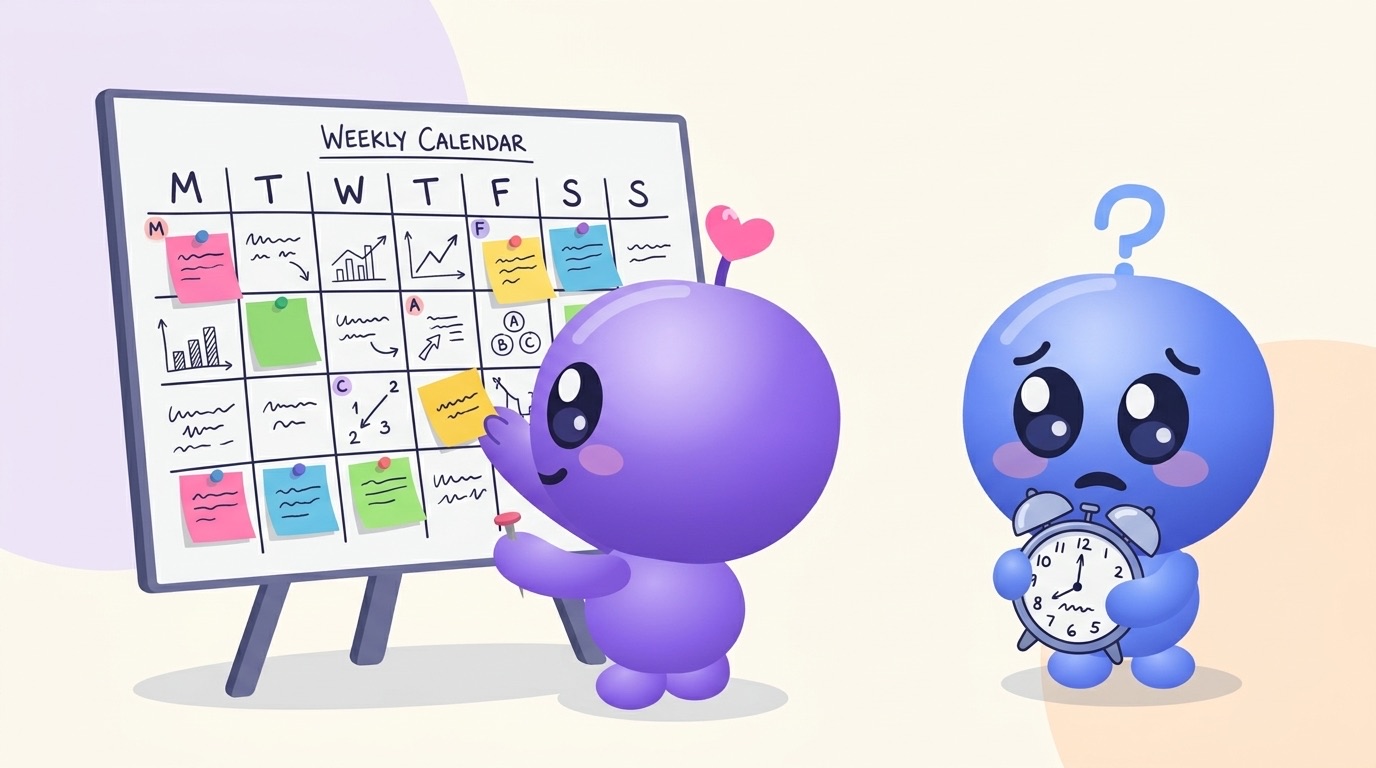
How to Make a Finals Week Study Schedule You'll Actually Stick To
Most finals schedules are wish lists. How to build one around the hours you really have, split time by weight and weakness, and spread subjects out. With a template.
· 6 min →
How to Study for Nursing Exams When They Test Judgement, Not Memory
Nursing exams ask what you'd do, not what you know. A practical system for pathophysiology, pharmacology and NCLEX-style questions.
· 7 min →
How to Use ChatGPT to Study (Make It Quiz You, Not Summarise for You)
Practical ways to use ChatGPT for studying, with prompts you can copy. The summary trap, the quiz-me approach, and where a chatbot falls short.
· 6 min →
Knowt Alternatives for When Flashcards Stop Being Enough
Knowt is a good free flashcard app. These Knowt alternatives are for when you hit the AI limits, or when your exam asks you to explain things, not define them.
· 6 min →
Quizlet vs Anki: One Is a Playground, the Other Is a Gym
Quizlet vs Anki compared for 2026: price, spaced repetition, ease of use, and which fits your course. Plus the problem neither of them solves.
· 6 min →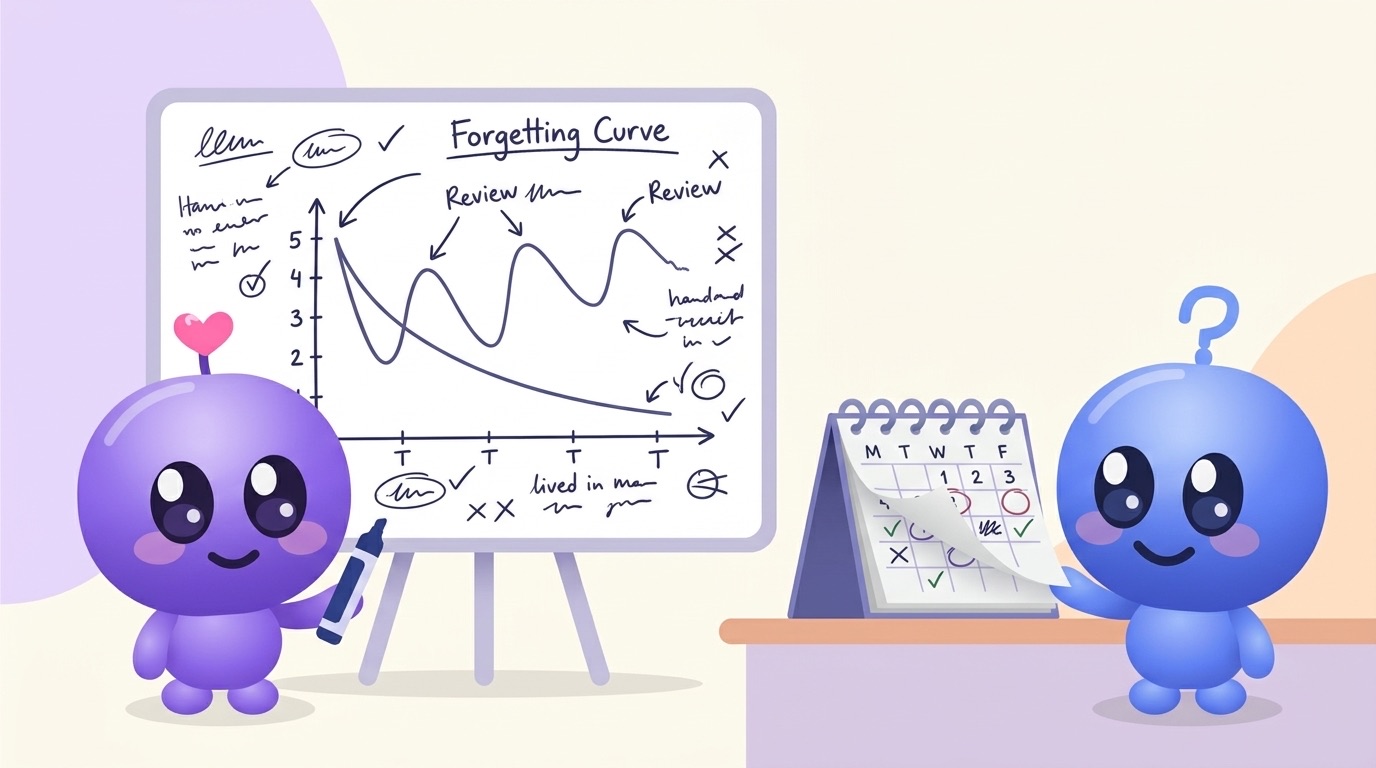
Spaced Repetition, Explained Simply (Plus a Schedule You Can Actually Follow)
What spaced repetition is, why cramming fades, and a simple review schedule (1 day, 3 days, 1 week, 2 weeks, 1 month) you can follow with or without an app.
· 6 min →
StudyFetch Alternatives for When You Hit the 10-Chat Wall
StudyFetch's free plan is roughly 10 chats and one study set. These StudyFetch alternatives give you a free tier you can actually get through a unit on.
· 5 min →
That Folder of Lecture Recordings You'll Never Rewatch? Turn It into Notes and Flashcards
How to turn a lecture recording into notes, flashcards and a quiz without rewatching the whole hour: by hand, from a transcript, or in one upload.
· 5 min →
The Best AI Flashcard Makers in 2026, and a 4-Point Test for Bad Cards
Not all AI flashcards are good flashcards. A four-point test for spotting bad ones, and the AI flashcard makers worth using in 2026.
· 6 min →
The Best Study Apps for Nursing Students in 2026
Study apps for nursing students that cover the whole job: pathophysiology, pharmacology, care plans and NCLEX prep. What each one is actually good at.
· 6 min →
The Feynman Technique: Learn Anything by Explaining It to a 12-Year-Old
The Feynman technique in four steps: explain it simply, find where you get vague, go back to the source, simplify again. How to use it for any subject.
· 5 min →
We Checked 1,761 AI-Written Quiz Questions. The Answer Was B 72% of the Time.
We audited every AI-written quiz question in our app. The answer was B 72% of the time and the longest option 67%. The tell, and how to beat it.
· 6 min →
Anki's Problem Was Never the Algorithm: 5 AI Alternatives That Make the Cards for You
Anki's scheduling is brilliant. Making the cards is what kills it. Five Anki alternatives with AI that build the deck from your lectures.
· 7 min →
How to Build a Cram Sheet That Actually Works (Not Your Notes in a Smaller Font)
Most cram sheets are just shrunken notes. How to build one that works the night before: predict the questions, answer from memory, compress to cues.
· 7 min →
NotebookLM Is Brilliant at Explaining. It Just Won't Make You Remember.
You can chat with your readings in NotebookLM and still blank in the exam. Why that happens, and the NotebookLM alternatives that actually test you.
· 7 min →
Quizlet vs Knowt in 2026, Written by a Competitor (So Check My Work)
Quizlet vs Knowt compared on price, free features, AI and libraries for 2026. Knowt wins on free, Quizlet on library, and both share one blind spot.
· 7 min →
Active Recall vs Rereading: Why Your Notes Aren't Working
Rereading feels productive and barely works. Active recall feels harder and works much better. Why, and four easy ways to start today.
· 5 min →
How to Turn Any Lecture PDF into Flashcards in 60 Seconds
Stop typing flashcards at 1am. How to turn a lecture PDF or slide deck into flashcards in about a minute, and how to get good cards out of it.
· 4 min →
The Best Free Quizlet Alternative in 2026 (No Paywall on the Stuff That Matters)
Quizlet moved Learn mode and its AI tools behind Plus. These are the free Quizlet alternatives worth switching to in 2026, and which one fits how you study.
· 6 min →