Here's a test. Pick something from this week's lecture that you think you understand, and explain it out loud in plain words, as if to a 12-year-old. No jargon. Go.
Most people get about three sentences in before they hit a spot where they wave their hands. "And then it sort of... regulates itself." That spot is the most useful thing you'll find all week, because it's exactly what you don't actually understand.
That's the Feynman technique. Explain a concept simply, notice where you get vague or fall back on textbook phrases, go back to your notes for just those bits, and explain it again more simply. It's named after the physicist Richard Feynman, who was famous for explaining hard ideas in plain language.
The four steps
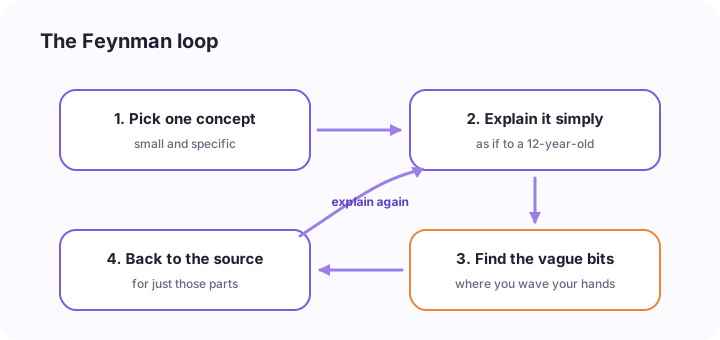
1. Pick one concept. Small and specific. Not "the cardiovascular system". Try "how the heart moves blood around the body". Write it at the top of a page.
2. Explain it simply. On paper or out loud, for someone with no background. Short sentences. If you use a technical word, explain it. Use an example or an analogy.
3. Find the gaps. You'll hit places where you get vague, skip a step, or reach for a phrase you can't unpack. Mark them.
4. Go back, fill the gaps, simplify again. Return to your lecture or textbook for just those points, then explain the whole thing again, more simply than before. Repeat until there's nothing vague left.
Why it works
- It's active recall. You're pulling the idea out of your head, not reading it. Why that beats rereading.
- It catches the illusion of understanding. Recognising an idea when you read it feels like knowing it. Explaining it shows you whether you do.
- It builds connections. Analogies and examples hook the new idea onto things you already know, which makes it easier to remember and easier to apply to a question you haven't seen.
Making it practical
- Say it out loud while walking. It's faster than writing, and you notice the gaps immediately.
- Use any listener. A friend, a pet, a rubber duck. They don't need to understand. You need to explain.
- Check the source after, not during. Checking during turns it back into reading.
- Use it for "why" topics. Mechanisms, processes, cause and effect. For pure memorisation like drug names or dates, flashcards are faster.
Getting someone to ask you
The technique is easier when someone asks the questions. In The Study Mill (which I build), the quiz includes questions you answer in your own words, and the AI marks whether you got the core idea, not whether you matched the textbook, and tells you what you missed. In Walk & Learn, the co-host Luke asks the "obvious" questions you might be too embarrassed to ask, and you answer out loud.
Try it now
Pick one idea from today and explain it in five sentences. If you get stuck, you've just found what to study tonight.
More: spaced repetition explained · how to use ChatGPT to study