
You know the feeling. You cram for a test, it goes fine, and a week later almost all of it has evaporated. Then it shows up again in the final and you're learning it from scratch.
Spaced repetition is the fix. Instead of studying something once for a long time, you review it several times with growing gaps in between: say a day, then three days, a week, two weeks, a month. Each time you successfully pull it out of memory, it lasts longer before it fades. You end up reviewing less in total and remembering more on exam day.
Why cramming fades
Memory drops off fast at first and then more slowly. That's the forgetting curve, first described by Hermann Ebbinghaus in the 1880s and confirmed many times since.
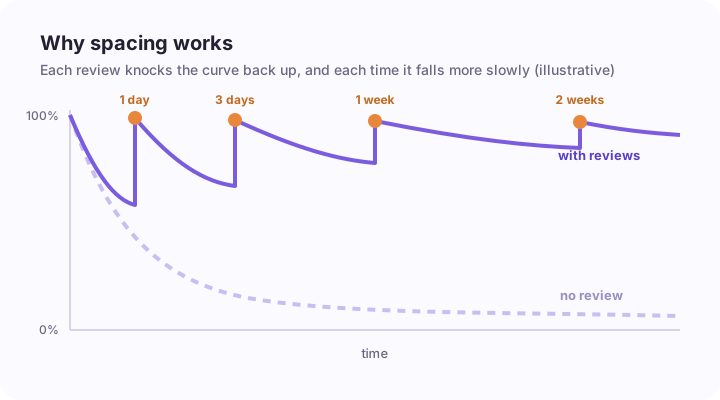
Every successful recall flattens the curve: next time, you forget it more slowly. Spaced repetition just times your reviews so each one lands when remembering is hard but still possible. That struggle is what does the work.
Two rules that matter
Space it out. Several short sessions over weeks beat one long one, even for the same total time. This is one of the most reliable findings in learning research.
Test, don't reread. A review only counts if you try to answer before you look. Rereading the back of a card isn't a review. More on active recall.
A schedule you can follow with no app
When you first learn something, say straight after a lecture, review it on this ladder:
| Review | When |
|---|---|
| 1st | Same day or the next |
| 2nd | 3 days later |
| 3rd | 1 week later |
| 4th | 2 weeks later |
| 5th | 1 month later |
Get it wrong and it goes back to the bottom. If it's easy, skip a rung.
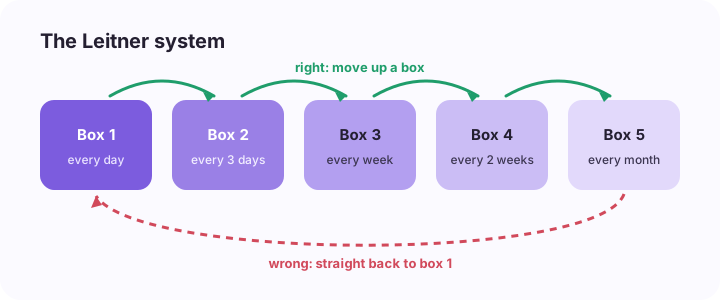
On paper, this is the Leitner system. Keep five boxes or piles of cards. Everything starts in box 1. Get a card right and it moves up a box; get it wrong and it drops back to box 1. Review box 1 daily, box 2 every few days, and so on.
Doing it with an app
Apps handle the scheduling for you:
- Anki is the most powerful, if you'll learn its quirks and make the cards. Quizlet vs Anki.
- The Study Mill, which I build, keeps the questions you get wrong in a "Needs attention" list for each week and brings due ones back in a daily review, so the things you're shakiest on come round first. It also writes the cards and questions from your lecture to begin with.
Common mistakes
- Adding too much at once. 200 new cards on Sunday means 200 reviews on Monday, and more after that. Add new material steadily.
- Skipping days. Reviews pile up fast. Ten minutes a day beats an hour on Fridays.
- Cards that are too big. One idea per card. If the answer is a paragraph, split it.
- Only using it for facts. Spacing works for understanding too. Re-attempt "explain why" questions on the same ladder.
Fitting it into a semester
After each lecture, make or generate the questions straight away. Do 10 to 20 minutes of due reviews daily before anything new. Once a week, redo everything you got wrong. By exam time you're reviewing, not learning for the first time, and that's the whole point.
More: a finals week study schedule · the best AI flashcard makers